


When You’re Coping on the Outside but Overwhelmed on the Inside
High-functioning anxiety can leave women feeling exhausted, overwhelmed, and mentally “on” all the time. Learn the signs, causes, and how counselling can help.
When Life Looks Fine, But It Doesn’t Feel Fine
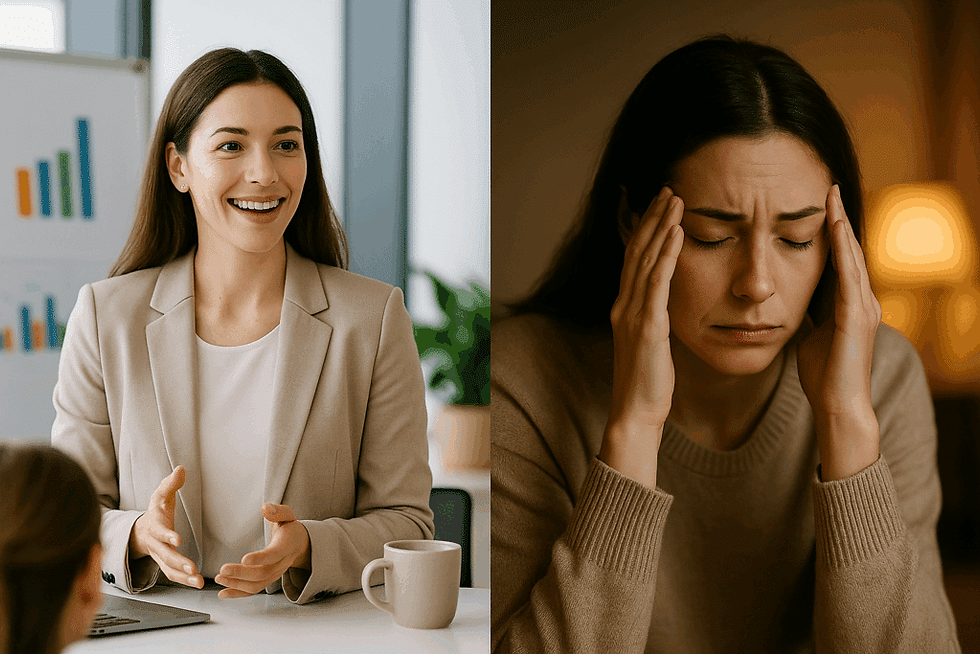
There’s a particular kind of anxiety that can quietly move through someone’s life without anyone else really noticing it. From the outside, everything can appear completely normal.
You still show up to work. You answer messages. You remember birthdays. You keep the household moving, meet deadlines, support other people emotionally, and somehow continue carrying all the things that need carrying. People often describe you as capable. Reliable. Organised. Calm under pressure. And yet internally, it can feel like your mind never truly sits down.
Even in quiet moments, there’s often something still running in the background. A constant mental checking system. Replaying conversations from earlier in the day. Wondering whether you said too much, not enough, or somehow got something wrong without realising it. You might lie in bed exhausted, desperately wanting rest, while your mind continues planning tomorrow before today has even finished and after a while, you stop questioning it because it simply becomes how life feels. It's not dramatic enough to seem like a “real” anxiety problem but exhausting enough that your nervous system rarely gets a genuine moment to exhale. For many women, this is what high-functioning anxiety actually looks like.
High-Functioning Anxiety Often Hides in Plain Sight
One of the difficult things about high-functioning anxiety is that it rarely matches the way people imagine anxiety should look. There may be no panic attacks.No visible breakdown.No obvious crisis.
Instead, it often hides underneath competence. Sometimes the very behaviours that receive praise from other people are the same behaviours quietly being fuelled by anxiety underneath.
Being hyper-organised. Always prepared. Always thinking ahead. Always carrying responsibility. Always staying emotionally aware of everyone around you. And because these traits are often rewarded socially and professionally, many women spend years believing they are simply “driven” or “busy” rather than recognising how much internal pressure they are living under every day.
The nervous system stays switched on for so long that hypervigilance begins to feel normal. You adapt to constantly monitoring things. Constantly anticipating. Constantly managing. Until one day you realise your body is technically resting, but your mind still doesn’t know how to stop scanning for what could go wrong next.
What High-Functioning Anxiety Can Feel Like Day to Day
Sometimes anxiety doesn’t arrive loudly. Sometimes it arrives through small moments that happen so often you barely notice them anymore. Reading a text message five times before sending it. Replaying conversations afterwards trying to work out how you came across. Feeling guilty for resting. Finding it difficult to fully relax even during downtime. Thinking ahead constantly so you don’t forget something important. Feeling mentally busy even while watching television or sitting still.
For many women, overthinking becomes less like an occasional experience and more like background noise that follows them through the entire day and eventually the body begins carrying it too. Tight shoulders. Clenched jaw. Fatigue that sleep doesn’t fully fix. A nervous system that feels alert even when there’s no immediate danger present.
What often makes this harder to recognise is that life still continues around it. You’re still functioning. Still coping. Still managing. But internally, it can feel like you’ve been emotionally holding your breath for years.
Where High-Functioning Anxiety Often Comes From
These patterns rarely appear out of nowhere. For many women, anxiety develops slowly over time through experiences where being alert once genuinely felt necessary. Sometimes it begins in childhood environments where unpredictability was common, and learning to stay emotionally aware became a way to feel safer. Sometimes it develops through difficult relationships where you learned to anticipate moods, tension, or conflict before it arrived. Sometimes it forms in adulthood through pressure, burnout, caregiving roles, perfectionism, or years spent trying to hold everything together without enough emotional support yourself.
Over time, the nervous system quietly learns something important:
“If I stay prepared, maybe nothing will go wrong.”
And honestly, that strategy probably helped for a while. The problem is that eventually the body forgets how to stand down. So even when life becomes calmer, the nervous system keeps responding as though something still needs managing. That’s why so many women describe feeling exhausted while simultaneously unable to relax.
Why Women Often Miss the Signs in Themselves
Many women minimise their own anxiety because they’ve become so used to functioning through it.
They compare themselves to people who seem “worse.” They tell themselves they should be grateful. They assume because they are still managing responsibilities, the internal stress somehow doesn’t count but emotional exhaustion doesn’t become less real simply because you’re coping well externally.
In fact, some of the most overwhelmed women are the ones who appear the most capable on the surface and there’s often a quiet loneliness in that experience because other people may not realise how much effort it takes just to maintain the appearance of coping.
The constant self-monitoring. The pressure. The emotional load. The inability to fully switch off.
Eventually the mind becomes tired from carrying so much invisible responsibility all the time.
Why “Just Relaxing” Usually Doesn’t Work
People with high-functioning anxiety are often told to relax more, slow down, or take a break.
But the reality is usually much more complicated than that. Because the problem isn’t simply lack of rest. It’s that the nervous system no longer experiences rest as fully safe. You can sit on the couch while your brain continues planning. You can take a holiday while mentally scanning emails. You can technically stop moving while still feeling internally tense. That’s why many women feel confused by their own exhaustion. They are resting physically…but mentally they’re still working. Still thinking. Still preparing. Still monitoring. And over time, that disconnect becomes deeply draining.
What Actually Starts Helping High-Functioning Anxiety
Healing high-functioning anxiety usually doesn’t happen through forcing yourself to “stop thinking.”
It starts much more gently than that. Often it begins simply by noticing what your nervous system has been trying to do for you all this time. Protect. Prepare. Prevent. Manage. And once you begin recognising those patterns, something slowly shifts. You start separating genuine danger from learned hypervigilance. You begin noticing when your mind is future-scanning rather than staying present. You learn that discomfort does not always mean something bad is about to happen. Little by little, the nervous system begins experiencing moments of safety again. Gradually enough that your body no longer feels like it has to stay emotionally “on duty” every second of the day.
You Don’t Have to Keep Living in Constant Overdrive
One of the saddest parts of high-functioning anxiety is how often people mistake it for personality.
They begin believing:“This is just how I am.” But anxiety is not your identity. It’s often a nervous system that adapted to pressure, stress, unpredictability, or emotional responsibility for a very long time and once you begin understanding that, it becomes possible to approach yourself with more compassion instead of criticism.
Many women describe the early stages of healing not as becoming completely different people…
but simply feeling a little more spacious internally. A quieter mind, softer body, more ability to be present instead of constantly preparing and after living in survival mode for long enough, even that small amount of relief can feel incredibly significant.
A Calm Space to Understand What’s Happening Internally
If this feels familiar, counselling can provide a supportive space to understand why your mind and body may have learned to stay in this heightened state for so long. Not to judge it, not to label you as broken but to gently understand the patterns underneath the exhaustion, overthinking, emotional pressure, and constant mental noise.
At Anchoring Your Life Counselling, we support women experiencing anxiety, overwhelm, overthinking, emotional exhaustion, and relationship stress through compassionate counselling in Redlands, Brisbane, and online across Australia.
Sometimes the beginning of change isn’t forcing yourself to cope better.
Sometimes it’s finally understanding why you’ve been carrying so much internally for so long.
→ Book a session or enquire today
Flexible scheduling · Online & in-person · Confidential